What percentage of enterprises use AI agents?
What counts as an enterprise AI agent deployment?
For this comparison, a pilot is a limited test. A production deployment runs in a live business process with an owner and operating controls. A survey may use another definition. The source’s own wording takes priority when reporting its figure.
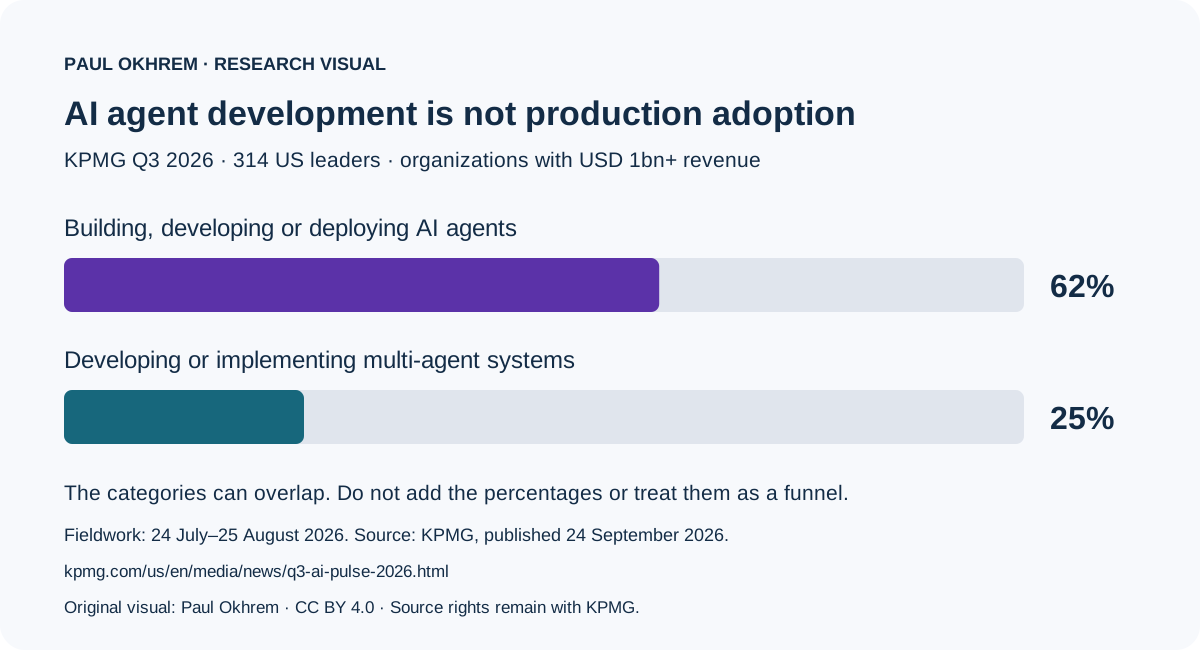
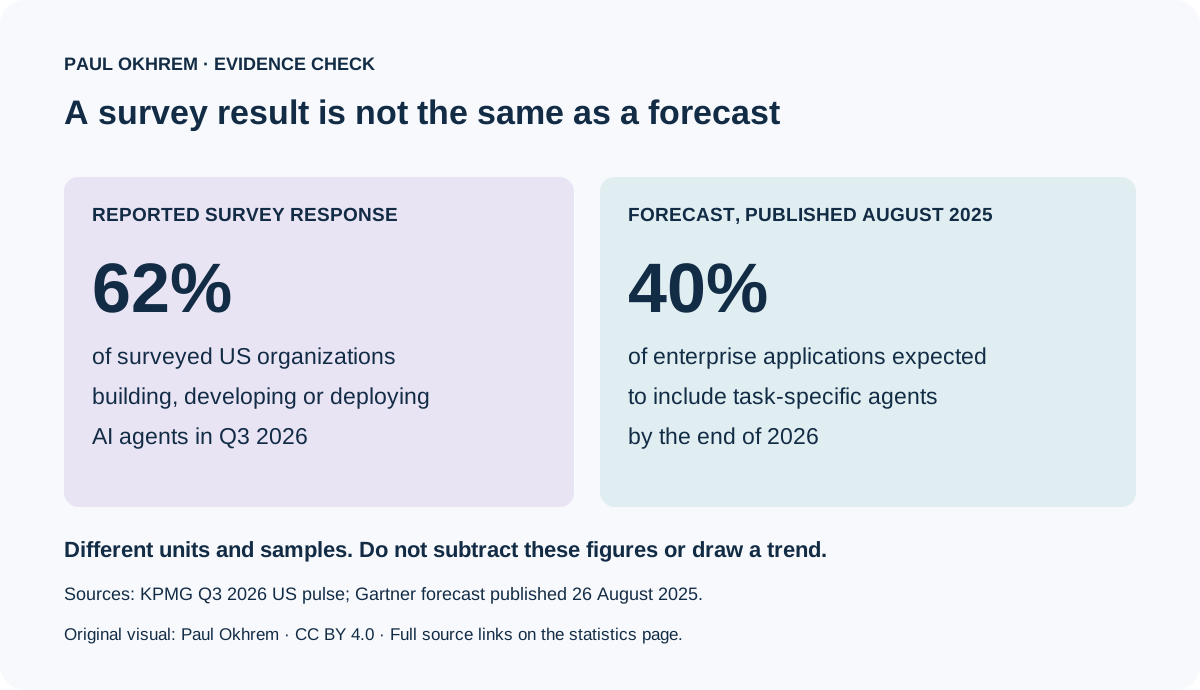
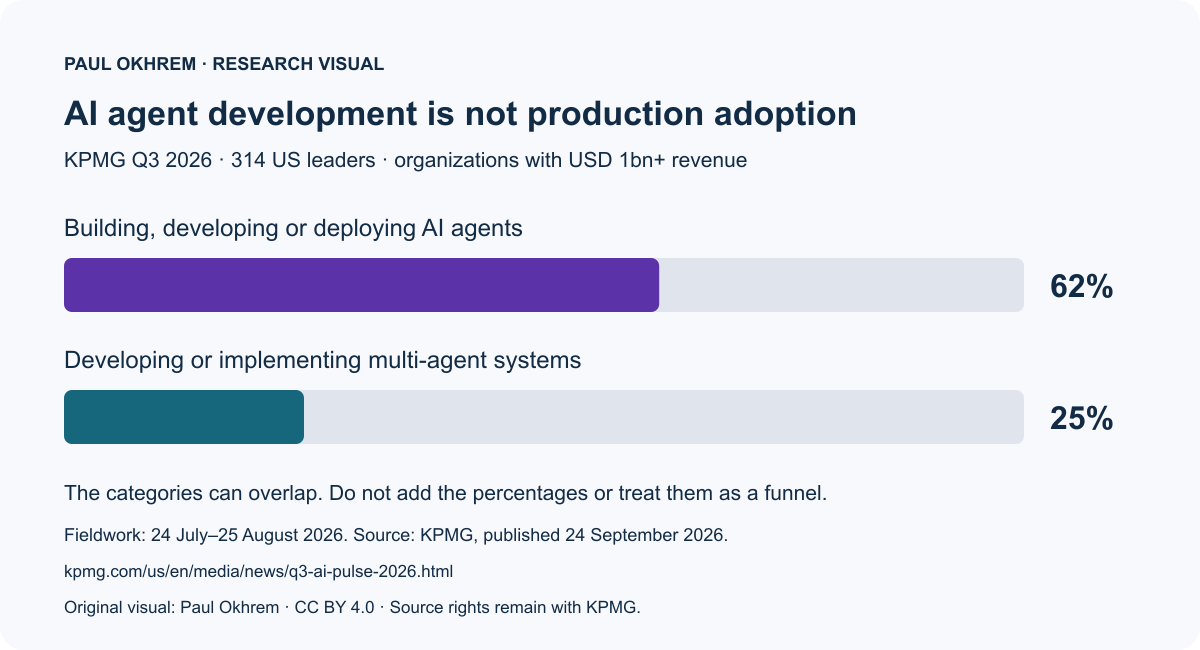
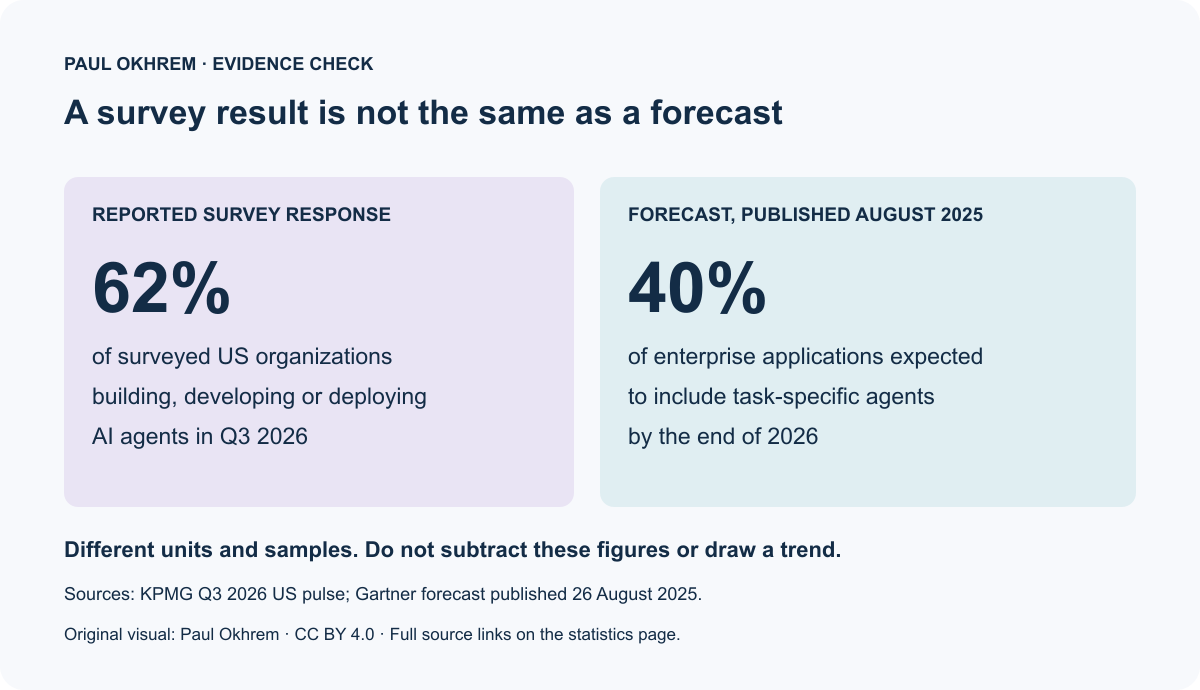
There is no single rate for every enterprise. KPMG surveyed 314 US executives at businesses with at least $1 billion in annual revenue. Fieldwork ran from 24 July to 25 August 2026. Its 62% includes development, not just live systems. Read the survey release.
62% of organizations are at least experimenting with AI agents, and 23% are scaling an agentic AI system somewhere in the enterprise, usually in one or two functions. These are self-reported findings from McKinsey's November 2025 report. Its survey covered 1,993 participants in 105 nations, with fieldwork from June 25 to July 29, 2025. This separate study does not measure the same population or stages as KPMG's 2026 survey.
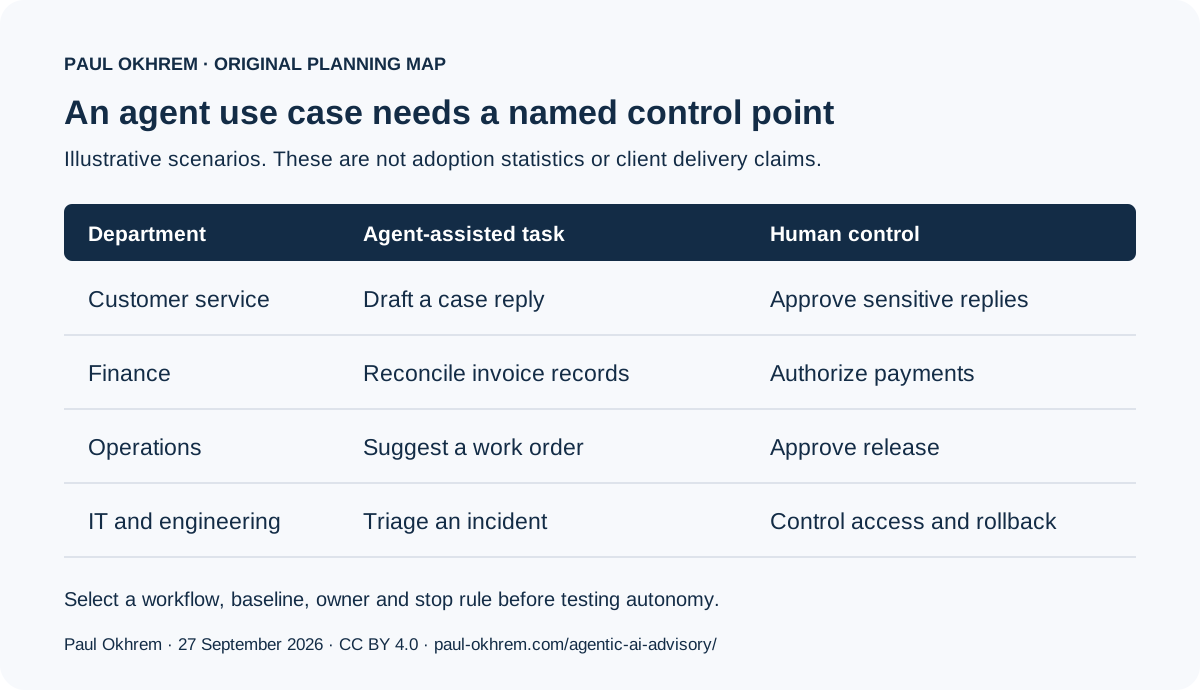
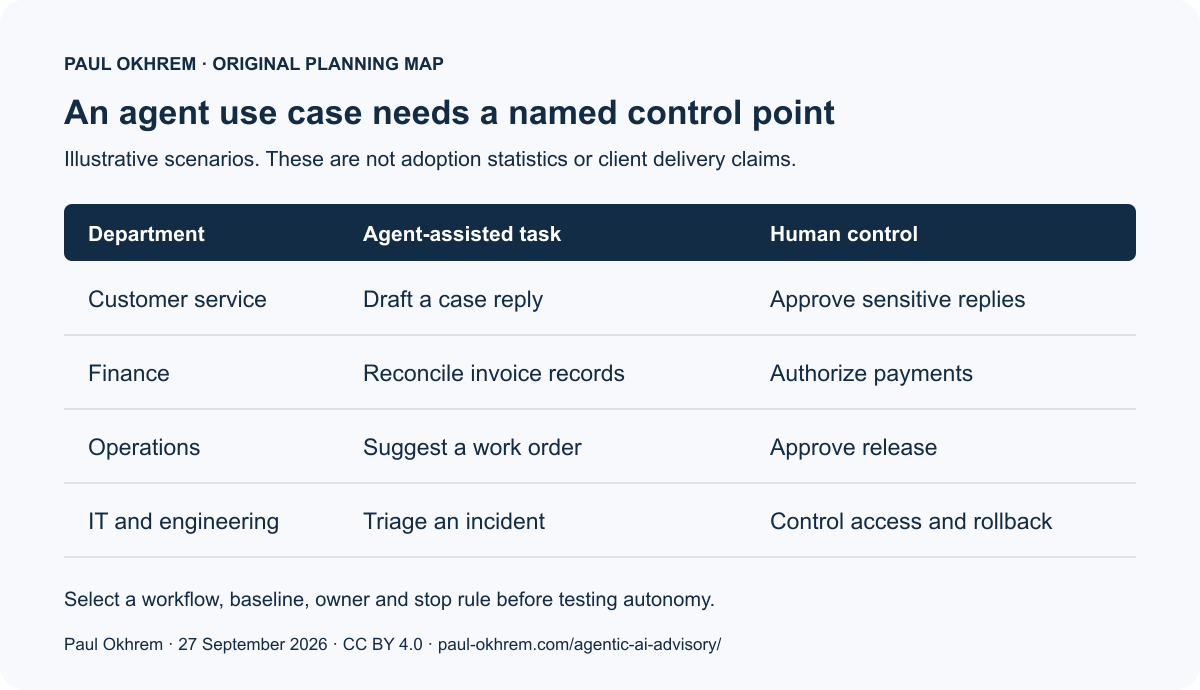
Separate four stages in your own benchmark: exploration, development, limited live use and scaled production. Count a production agent only when it handles real work under an approved operating process. Record who owns it, how many tasks it completes and how often a person intervenes.
Gartner's application-level forecast answers a different question. A business can have one live agent while most of its applications have none. Do not combine these measures into one adoption trend.
Investors who test a target's AI claims can use the AI due diligence checklist. Request evidence behind adoption figures like these.
Development and production use need separate evidence. The work of moving AI agents from pilot to production starts with a baseline and an owner.